Most people don’t realize their dog is pulling until their shoulder starts to ache. A tight leash feels normal after a few weeks, like a handshake that never ends. Then comes the morning your dog spots a cat, lurches forward, and you find yourself skidding down the sidewalk wondering how a forty-pound animal got so strong. Pulling is one of the most common complaints trainers hear, and it is also one of the most fixable.
The good news is that you do not need a special collar, a harsh jerk, or a dominant attitude. Dogs pull because it works: the leash goes tight, and they get where they want to go. Change that equation, and you change the behavior. This guide walks you through why dogs pull, the gear that helps without hurting, and a step-by-step plan you can follow over several weeks, with real-world scenarios for the moments that tend to go wrong.
Key takeaways
- Dogs pull because they are rewarded for it. Every time a tight leash gets them closer to something interesting, pulling gets stronger.
- Loose-leash walking is a skill that has to be taught in easy places before it can work on a busy street.
- The two core methods are rewarding the dog for staying by your side and stopping or turning when the leash goes tight.
- A well-fitted front-clip harness or a flat collar is enough. Prong, choke, and shock collars are unnecessary and can cause pain, fear, and injury.
- Expect progress in weeks, not days. Consistency from everyone who walks the dog matters more than any gadget.
- Meeting your dog’s need to sniff, explore, and burn energy makes calm walking much easier.
- Reactivity, fear, or sudden changes in how your dog walks are good reasons to involve a veterinarian or certified trainer.
Why dogs pull in the first place
It helps to see the world from the other end of the leash. You walk at a few miles an hour, in a straight line, with a destination in mind. Your dog is a nose on legs, and the sidewalk is a newspaper full of fascinating headlines. Dogs also naturally walk faster than most people, and they are excited about being outside.
Pulling is reinforced all day long
Imagine your dog leans into the leash toward a fire hydrant, and you follow. Pulling worked. They lean toward the next tree, and you walk faster to keep up. Pulling worked again. After a few hundred repetitions, a dog does not need to be taught to pull. The habit installs itself. Many owners also unintentionally reward the behavior by letting the dog drag them to the park, since the park is the best part of the walk.
Excitement and lack of practice
Some dogs pull because they are over-aroused, which is the dog equivalent of a toddler running down the street. Others simply have never been taught an alternative. Adolescent dogs, usually from about six months to two years, tend to be especially strong-willed and distractible. None of this means your dog is trying to be in charge. Dogs do not walk ahead to establish rank. They walk ahead because the interesting things are there.
Rule out discomfort
If your dog suddenly begins pulling, lagging, or walking oddly, talk to your veterinarian. Pain from joints, paws, or the neck can change how a dog moves, and ill-fitting gear can rub or pinch. Do not assume stubbornness before you have checked for a physical reason.
Choosing safe, humane gear
Gear can make walking easier, but it never replaces training. Think of equipment as a helper that keeps everyone comfortable while the real learning happens.
Collars and harnesses
A flat buckle collar with an ID tag is fine for dogs who do not pull hard. For dogs who do, many trainers like a well-fitted harness with a front attachment point, where the leash clips on the chest. When the dog pulls, the harness gently turns them sideways toward you, which makes pulling less effective. A back-clip harness is comfortable but can encourage some dogs to lean in and pull harder. Whatever you pick, check the fit: you should be able to slide two fingers beneath any strap, and the harness should not restrict the shoulders or rub the armpits.
Head halters
A head halter fits around the muzzle and neck and can reduce pulling in strong dogs. It needs a careful, gradual introduction with treats, because many dogs dislike it at first. Never snap the leash or let the dog hit the end of the line while wearing one, since the head and neck are delicate. If you are unsure, ask a certified trainer to help with the fitting.
Tools to skip
Prong collars, choke chains, and electronic shock collars work by causing discomfort, and they carry real risks, including neck injury, fear, and aggression directed at whatever the dog associates with the pain. Professional bodies such as the American Veterinary Society of Animal Behavior advise against aversive methods, and you do not need them. Retractable leashes are also a poor choice for training. They teach dogs that pulling extends the leash, and the thin cord can cause injuries to people and dogs.
The leash itself
Choose a standard six-foot (1.8 m) leash that is comfortable in your hand. A longer line of 15 to 30 feet (4.5 to 9 m) is useful for off-trail sniffing and recall practice in open areas, but keep a six-foot leash for neighborhood walks and training.
Setting your dog up to succeed
Exercise and sniff time first
A dog who has been inside all day will burst out the door like a soda bottle. Before you work on walking, give your dog a few minutes in the yard, a game of fetch or tug, or a food puzzle. You are not trying to tire the dog out completely. You are trying to take the edge off.
Treats that are worth the effort
Use soft, pea-sized treats that are more exciting than dry biscuits. Keep a stash in a pouch at your hip so you can deliver rewards quickly right beside your leg, which is exactly where you want your dog to be. Count the treats as part of the daily food allowance, and check with your veterinarian if your dog has dietary restrictions.
Pick a start line
Loose-leash walking begins in the quietest place you have: a hallway, the living room, or a fenced yard. Skills transfer to new places slowly, so expect to start over a little each time the setting gets harder.
Method one: Reward the position you want
This is the foundation. Instead of waiting for pulling and reacting, you pay your dog generously for being where you want them to be.
Step-by-step plan
- Stand still with your dog on a loose leash, treats in hand.
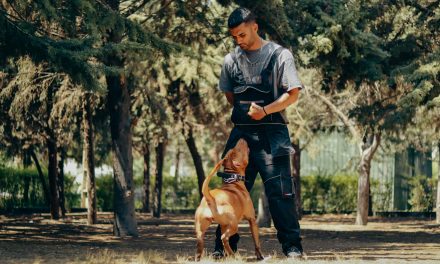
- Say “yes” and give a treat when your dog looks at you or stands at your side. Hold the treat next to your leg so your dog learns the target position.
- Take one step. If your dog follows with a loose leash, say “yes” and treat at your leg.
- Take two steps, then three, then five, rewarding every few steps. Keep the pace slow and the rewards frequent.
- Add a verbal cue such as “let’s go” just before you step off once your dog is reliably doing the behavior.
- Gradually reduce the treat frequency, but keep rewarding well for the best walking.
Many people are surprised by how often the early rewards need to come. Every second or third step is not too much for a beginner. You are paying for something your dog finds very hard.
Pick a side
Choose the left or right and stick with it while you teach the skill. You can teach both sides later. The treat hand should always be on the side where the dog walks, so the dog is rewarded in the right spot.
Method two: Stop and go
This method uses the dog’s own motivation. Your dog wants to move forward, so forward movement becomes the reward for a loose leash.
How it works
The instant the leash becomes tight, stop walking. Stand still like a tree, with no yanking and no talking. Wait for your dog to ease the tension, either by looking back at you, stepping toward you, or sitting. When the leash goes slack, say “yes” and continue walking. Mark and reward the first loose-leash steps to make the lesson clear.
Turn and walk away
If stopping isn’t working, calmly turn and walk in the opposite direction. Your dog will reach the end of the leash behind you, and when they catch up and move beside you, reward them. This feels slow and a bit silly at first, and your thirty-minute walk may turn into a ten-minute trip around the block. That is normal. You are teaching a new skill, not covering distance.
The most important rule
Never let a tight leash get your dog where they want to go. If your dog drags you toward a patch of grass and you follow, the entire lesson is erased. This is why consistency matters so much, and why everyone in the household should use the same rules.
Method three: The check-in game
Some dogs find it easier to learn when attention is part of the picture. In this game, you reward your dog for voluntarily looking at you.
- Walk normally on a loose leash.
- Whenever your dog glances at you, even briefly, say “yes” and treat.
- Over days, your dog begins to check in more often, because looking at you pays well.
- Later, you can reward for choosing to turn away from a distraction toward you.
This approach also builds a habit that is handy later for dogs who get excited around other dogs, bikes, or squirrels.
A week-by-week training plan
| Week | Where to practice | Main skill | Session length |
|---|---|---|---|
| 1 | Inside the house or a quiet room | Reward position beside you, a few steps at a time | 3 to 5 minutes, 3 times a day |
| 2 | Backyard or driveway | Stop-and-go, longer strings of loose-leash steps | 5 minutes, 3 times a day |
| 3 | Front of the house and quiet street | Turn-and-go, check-in game | 5 to 10 minutes, twice a day plus normal walks |
| 4 | Neighborhood at quiet times | Passing mild distractions, such as parked cars and leaves | 10 to 15 minutes of training mixed into walks |
| 5 to 6 | Busier streets, park edges | Walking past people and calm dogs at a distance | Normal walks with frequent rewards |
| 7 and beyond | Everywhere | Fading treats, using real-life rewards | Normal walks |
Some dogs move through this in four weeks. Others take three months. Both are normal. A young, high-energy, or easily excited dog simply needs more repetitions.
An example session
Take your dog to the driveway with ten treats and a six-foot leash. Stand still and reward a few glances. Take five steps, rewarding at your leg on step three and step five. When the leash tightens, stop for a few seconds until it loosens, then say “yes” and move on. Turn around twice and reward the dog for catching up. After about five minutes, end the session with a game of tug or let the dog sniff a favorite spot. You will have rewarded the dog perhaps forty times, which is a good sign, not a bad one.
Using real-life rewards
Treats are not the only thing your dog finds valuable. A sniff of a tree, a trip to the park, or a chance to greet a friendly neighbor can all be rewards for walking nicely. This is sometimes called the Premack principle: a more desirable activity rewards a less desirable one.
The “go sniff” release
Teach a cue like “go sniff” or “free time” that means your dog may pull toward a scent. Before releasing, ask for a few steps of loose-leash walking. Then say the cue and let the dog explore up to the end of the leash. This gives your dog an outlet and reduces frustration, since the dog learns that sniffing is not forbidden but happens on cue. Many owners find this one change transforms their walks.
Let your dog be a dog
Sniffing is not a bad habit. It is how dogs read the news, and it is mentally tiring in a good way. A walk with plenty of sniff time often leaves a dog calmer than a fast march. If you are always hurrying, your dog may pull more, partly because the pace asks for more speed than your dog can give while still gathering information.
Handling common situations
The explosive start at the door
Ask your dog to sit before the door opens. If your dog stands up, close the door. Wait for the sit, open, and invite the dog to walk out with you with a release cue. This may take a few minutes at first. Rushing through the door sets the stage for pulling the whole walk. Clip the leash on only after your dog is calm, and take a deep breath yourself, since dogs pick up on tension.
Squirrels, cats, and other temptations
You can’t teach “never lunge at a squirrel.” But you can build a habit of looking at you first. Practice the check-in game and, when you see a squirrel before your dog does, increase distance, reward, and walk on. Keep treats ready and use a lower-pitched, calm voice. If your dog is already pulling hard, calmly turn and move away to create distance, then reward when the dog follows. Do not reel the dog in with force.
Passing other dogs
Meeting other dogs on leash can be challenging, because leashes limit a dog’s ability to approach naturally and move away. Cross the street or arc widely if you can, and feed a stream of small treats as the other dog passes. Not every dog on the sidewalk wants to say hello, and it is fine to tell the owner “we’re training.” If your dog barks, lunges, or growls at other dogs, see the professional-help section below.
Hot pavement and weather
Before walking in summer, press the back of your hand on the pavement for seven seconds. If it is too hot for your hand, it is too hot for paws. Walk in early morning or after sunset, carry water, and watch for heavy panting, drooling, or lagging, which can signal overheating. Flat-faced breeds, overweight dogs, puppies, and seniors are especially at risk. In cold weather, shorten walks for small, thin-coated, or older dogs and wipe paws after contact with salt or chemicals.
Special considerations by life stage
Puppies
Puppies can start learning loose-leash walking as soon as they come home, in short, playful sessions. Many are not fully vaccinated yet, so begin in your yard or home and ask your veterinarian where it is safe to explore. Keep walks short, use a lightweight harness, and expect a lot of stopping to sniff and sit. Their growing joints do not need forced marches, and tired puppies make poor learners.
Adolescents
The teenage months can feel like a regression. A dog who walked beautifully at four months may suddenly act as if they’ve never heard of a leash. Stay consistent, shorten sessions, and make rewards more valuable. This phase passes.
Senior dogs and dogs with joint problems
Older dogs may pull less but can still struggle with leash manners, especially if hearing or vision is fading. Pain can also make a dog hurry to get a walk over with, or lag behind. Choose flat, soft surfaces, shorten distances, and ask your veterinarian about any limping, stiffness, or reluctance to walk. A supportive harness can help some dogs, but check with your veterinarian before using any mobility aid.
Large and strong dogs
If you are walking a dog who outweighs you, safety comes first. Use a well-fitted front-clip harness, wrap the leash securely around your hand only if you can do so without risk of being pulled over, and prioritize training in controlled areas. A professional trainer can help you work out a safe plan.
Common mistakes
- Yanking the leash. Leash jerks can injure the neck and teach the dog to pull harder against pressure, since dogs naturally lean into force.
- Moving forward on a tight leash. Even once in a while teaches your dog that persistence pays.
- Starting too hard. Practicing on a crowded sidewalk before your dog has mastered the driveway sets everyone up to fail.
- Too few rewards. Early on, you should feel as though you are giving away too many treats.
- Long, tiring sessions. Dogs, like people, make more errors when tired or frustrated.
- Different rules for different people. If one family member lets the dog pull, progress slows.
- Using a retractable leash for training. It constantly teaches the opposite of what you want.
- Scolding or punishing. Yelling or leash corrections add stress and can make leash reactivity worse.
- Skipping sniff time. A dog who is never allowed to sniff will fight harder to do it.
- Giving up too soon. Habits built over months do not vanish in a weekend.
A mini-scenario
Marcus has a young Labrador mix named Pepper who drags him out the front door every morning. For two weeks, Marcus drops his usual route and only walks to the end of the driveway and back. He rewards Pepper for every few loose steps, turns around when the leash tightens, and finishes each session with a game of tug. By week three, Pepper walks to the mailbox beside him, and in week five they are strolling to the corner. It is not a miracle. It is simple repetition.
When to call a professional
Leash walking is a learnable skill, but sometimes the problem is bigger than pulling.
- Your dog lunges, barks, or growls at people, dogs, or vehicles. This is called leash reactivity and often involves fear or frustration.
- Your dog seems fearful on walks, freezes, or tries to bolt.
- Your dog suddenly begins pulling, lagging, or showing discomfort.
- You’ve been working consistently for several weeks with no improvement.
- You have physical limitations or a very large dog and worry about being pulled over.
- Any incident involves biting or snapping.
Begin with a veterinary check to rule out pain or illness. Then look for a certified professional dog trainer, such as a CPDT-KA, who uses reward-based methods and offers private lessons or small classes. For serious reactivity or aggression, a veterinary behaviorist can provide a full evaluation and, when appropriate, work alongside your regular vet. If a trainer proposes prong, choke, or shock collars, or says your dog needs to be “shown who’s boss,” find someone else.
Frequently asked questions
How long does it take to stop leash pulling?
Most dogs show noticeable improvement within two to four weeks of daily practice, and reliable walking in distracting places often takes two to four months. Age, breed, history, and consistency all matter. Adolescent dogs and dogs with years of pulling practice may need more time.
Is a harness better than a collar?
For many dogs, yes. A harness spreads pressure across the chest instead of the neck, and a front-clip style can reduce pulling. A flat collar is fine for dogs who walk well. Whichever you choose, it must fit properly and be paired with training.
Should I let my dog walk in front?
Where your dog walks does not matter as long as the leash stays loose. Walking ahead has nothing to do with dominance. Teach a position that suits you, and release your dog to sniff and explore when appropriate.
My dog is great at home but terrible outside. Why?
Dogs do not generalize well. The world outdoors is more exciting and distracting, so the skill needs to be rebuilt gradually. Use better treats, begin farther from distractions, and shorten sessions. It is normal for performance to dip in a new place.
Can older dogs learn loose-leash walking?
Absolutely. Older dogs may have more entrenched habits, but they learn the same way younger dogs do. Be patient, keep sessions short, and talk to your veterinarian about any physical limits.
Do I need treats forever?
Not forever, but fade them gradually. As the skill becomes reliable, use treats less often and rely more on real-life rewards such as sniffing and moving on. Keep a few treats in your pocket for tough moments or new places.
What if my dog pulls only toward other dogs?
That points to excitement, frustration, or fear, and it is worth working on with distance and a professional trainer’s help. Practice at a distance where your dog can still take treats, and slowly work closer over many sessions. Never force greetings.
How much exercise does my dog need?
It depends on age, breed, and health. Many adult dogs do well with 30 to 60 minutes a day split into several outings, and some need more or less. Ask your veterinarian for advice tailored to your dog, particularly for puppies, seniors, and dogs with medical conditions.
A last word from one dog walker to another
There will be days when your dog forgets everything and you feel as if you’ve started over. Every trainer has been there, and so has every dog. Stay calm, go back to an easier step, and celebrate the small wins: a loose leash past a mailbox, a glance up at you instead of the squirrel, a ten-minute walk with no tugging. Those moments add up, and one day you will realize you are walking down the street, coffee in hand, with a dog who is simply walking beside you.