Most of us can tell when a dog is thrilled to see us. The tail wags, the whole back end wiggles, and there’s no mistaking the message. Cats are subtler. A happy cat might simply walk into the room, sit down a few feet away, and blink slowly, and if you aren’t paying attention you’ll miss what was, in cat terms, a heartfelt greeting. Learning to read those quiet signals is one of the best things you can do for the animal sharing your sofa.
This guide walks through ten signs that point to a content, physically healthy cat, explains what each one looks like in real life, and tells you what it means when a sign is missing or changes. Because cats are experts at hiding discomfort, we’ll also cover the warning signs that deserve a call to your veterinarian, the mistakes well-meaning owners make, and a simple weekly routine for keeping tabs on your cat’s wellbeing.
Key takeaways
- A healthy, happy cat eats with steady interest, drinks normally, grooms herself, uses the litter box without fuss, and sleeps deeply in relaxed positions.
- Body language tells most of the story: an upright, softly curved tail, slow blinks, relaxed ears, and a loose body all signal comfort.
- Play, curiosity, and affection on the cat’s own terms are signs of good emotional health, not just good manners.
- Change matters more than any single behavior. Learn your cat’s normal so you can spot a shift early.
- Cats hide illness. Not eating for 24 hours, straining in the litter box, hiding, lethargy, or labored breathing all call for a prompt veterinary visit.
- Routine wellness exams, a safe home, and plenty of enrichment do more for long-term happiness than any single trick.
Why reading a cat takes practice
Cats evolved as solitary hunters that were also small enough to be prey for larger animals. Showing weakness was dangerous, so they became skilled at looking fine when they weren’t. A cat with a sore tooth may still eat. A cat with early kidney trouble may simply seem a little quieter. By the time the signs are obvious, the problem has often been brewing for a while.
That’s why this list focuses on patterns rather than isolated moments. One missed meal after a stressful day is different from a gradual slide in appetite over two weeks. Every cat has her own baseline, and you are the person best placed to know it.
Start with a baseline
For one week, jot down a few quick notes: how much she eats and drinks, how often she visits the litter box, when she’s most playful, where she likes to nap, and how she greets you. You don’t need a spreadsheet. A phone note works. The point is to have something to compare against when you wonder whether she seems off.
Sign 1: A steady, healthy appetite
A well cat looks forward to meals. She may trot to the kitchen when she hears the cupboard open, or sit near her bowl at the usual time. She eats with focus and finishes a reasonable portion without gagging, dropping food, or chewing on only one side of her mouth. Weight stays stable over months, and you can feel her ribs under a thin layer of padding without them sticking out.
What a healthy pattern looks like
- Consistent interest at mealtimes, even if she’s a grazer who eats small amounts all day.
- No sudden pickiness, such as sniffing the bowl and walking away from food she normally loves.
- Normal chewing and swallowing, with no pawing at the mouth or dropping kibble.
- Weight that holds steady or changes slowly and for a reason, like a diet your vet recommended.
When appetite changes
A cat who skips a meal and then eats normally is probably fine. A cat who eats nothing for a full day is not. Unlike dogs, cats can develop serious liver problems when they go without food, so a full day of refusing meals warrants a call to your vet. Increased appetite matters too. A cat who is suddenly ravenous yet losing weight needs an exam.
Sign 2: Normal drinking and a tidy litter box
Water intake and litter box habits are among the most useful health indicators you have, and they’re easy to watch. A healthy cat drinks small to moderate amounts, often not much if she eats canned food, which contains a lot of moisture. Her litter box visits follow a predictable rhythm, and the clumps are a consistent size with no blood, strong change in odor, or unusual color.
What to look for in the box
- Urine clumps that are roughly the same size from day to day. Very large clumps, or a sudden jump in the number of clumps, can signal a change in thirst or kidney function.
- Firm, well-formed stools that are easy to scoop.
- Quick, quiet visits with no crying, straining, or lingering.
- All the elimination happening in the box, not beside it.
A note on urgency
Straining to urinate, going back and forth to the box with little result, or crying while trying to pee is an emergency, especially in male cats, because a urinary blockage can become life-threatening within a day or so. Do not wait to see whether it passes. Call your veterinarian or an emergency clinic right away.
Sign 3: Grooming that looks tidy but not obsessive
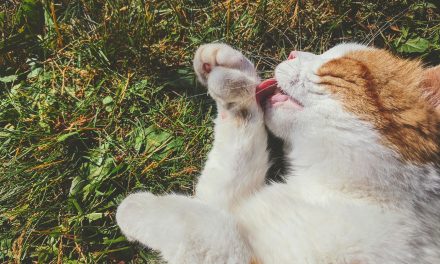
Cats spend a good portion of their waking hours grooming, and a well-kept coat is one of the clearest outward signs of health. A happy cat’s fur is smooth and slightly glossy. She washes after meals, stretches out to clean her legs, and may nap right after a good wash. Grooming is also self-soothing, so a cat who grooms in a calm, unhurried way is usually relaxed.
Too little grooming
A scruffy, matted, greasy, or dandruffy coat often means something hurts or the cat doesn’t feel well. Arthritis can make it painful to twist and reach the lower back. Dental disease can make licking uncomfortable. Overweight cats sometimes can’t reach their hindquarters. Older cats commonly groom less, and that alone is worth mentioning to your vet.
Too much grooming
Licking until bald patches or thin spots appear is a different red flag. Stress, boredom, skin allergies, and pain can all drive over-grooming. Because the causes range from emotional to medical, the first stop is a veterinary exam, followed by a look at changes in the household that might be bothering her.
Sign 4: Relaxed body language from nose to tail
If you only learn one skill from this article, make it reading the whole cat rather than a single feature. A comfortable cat looks loose. Her muscles are soft, her movements flow, and nothing about her seems braced or coiled.
| Body part | Relaxed and content | Worried or unwell |
|---|---|---|
| Tail | Held upright with a gentle curve at the tip, or resting loosely behind her | Tucked tightly under the body, puffed up, or lashing sharply |
| Ears | Forward or in a neutral, slightly sideways position | Flattened against the head or rotated sharply back |
| Eyes | Soft, half-closed, or slow blinking | Wide with large pupils, or a fixed hard stare |
| Whiskers | Natural, slightly fanned out | Pulled tight against the face |
| Posture | Loose, stretched out, or tucked in a loaf with eyes soft | Hunched, crouched low, or standing rigid |
The slow blink
When your cat looks at you and slowly closes and opens her eyes, she’s showing trust. You can answer in kind: soften your gaze, blink slowly, and look away. Many cats will blink back, and it becomes a small ritual you share.
The upright tail
A tail held high like a flagpole, especially with a little quiver at the tip, is a friendly greeting. Cats use it when they approach someone they like. If she walks up to you with her tail up and rubs against your legs, she’s saying hello.
Sign 5: Deep, comfortable sleep
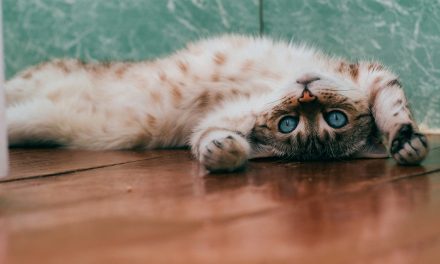
Adult cats typically sleep a large part of the day, often somewhere between twelve and sixteen hours, and kittens and seniors sleep even more. What matters is the quality of that rest. A content cat sleeps in positions that leave her vulnerable: stretched on her side, curled with her paws tucked, or flopped on her back with her belly exposed. That level of relaxation tells you she feels safe in her space.
Healthy sleeping habits
- She chooses a few favorite spots, often a sunny windowsill, a cushion, or a spot on your bed.
- She wakes easily and stretches fully, then moves with ease.
- She’s active at some point every day, even if it’s mostly around dawn and dusk.
Sleep that raises questions
A cat who sleeps in an unusual place, such as a cold bathtub or behind the washing machine, who sleeps hunched with her paws tucked tightly under her chest and eyes half open, or who seems unusually hard to rouse, may not be comfortable. Watch for a change from her normal. If she has stopped using her favorite high perch, ask yourself whether jumping has become painful.
Sign 6: Playfulness and curiosity
Play is how cats rehearse the hunting skills they’d need in the wild, and a cat who still wants to stalk, pounce, and chase is usually feeling well in both body and mind. Play looks different at different ages. A kitten may bounce off the walls. A ten-year-old may only manage a few intense minutes of stalking a feather toy before she’s done, and that’s perfectly normal.
Signs of healthy curiosity
- She investigates new boxes, bags, and sounds with ears forward and a loose body.
- She watches birds through the window, chattering or twitching her tail tip.
- She brings you a toy, bats a bottle cap across the kitchen, or ambushes your ankles in the hallway.
- She follows you from room to room to see what you’re up to.
Making play part of the day
Two or three short play sessions a day, five to ten minutes each, make a real difference. Use a wand toy so her claws and teeth go on the toy and not your hands, and let her catch it now and then, because a hunt that never ends in a catch gets frustrating. Finish with a small meal or treat to complete the hunt-catch-eat cycle. If your cat has lost interest in play, don’t assume she’s just getting older. Pain, dental trouble, and illness can all dampen her enthusiasm.
Sign 7: Affection on her own terms
A happy cat shows love in ways that are easy to overlook. She may head-bump you, rub her cheeks on your hand, knead a blanket on your lap, or simply choose to sit near you. Rubbing is a way of mixing scents, and cats do it to people and things that make them feel secure. Kneading is a holdover from nursing and generally signals deep contentment.
Purring is not always happiness
Cats purr when they’re content, but they also purr when they’re anxious, in pain, or even seriously ill, apparently as a way to comfort themselves. Judge a purr in context. A loose, relaxed cat purring on your lap is happy. A hunched cat purring in a corner is a different story.
Respecting her limits
Not every cat is a lap cat, and that’s fine. Some are happiest near you, not on you. Watch for signs that petting has become too much: a twitching tail, skin rippling along the back, ears rotating or flattening, or her head turning toward your hand. Stop at the first sign, and she’ll trust you more the next time.
Sign 8: Clear eyes, clean ears, a healthy nose and mouth
Physical details tell you a lot, and a quick check once a week takes only a couple of minutes.
- Eyes: bright and clear, with no heavy discharge, redness, cloudiness, or a third eyelid that stays visible.
- Ears: clean inside, with little wax and no strong odor, redness, or constant scratching and head shaking.
- Nose: free from crusting or ongoing discharge. A cool, moist nose isn’t a reliable health test either way.
- Mouth: pink gums, no strong foul smell, and no drooling or pawing at the face.
- Skin and coat: no flaking, scabs, lumps, or bald patches.
Bad breath is more than a nuisance. Dental disease is very common in cats and can cause pain a cat will quietly tolerate for months. Your veterinarian can check her teeth at every wellness visit and tell you what care she needs.
Sign 9: Confident, easy movement
A healthy cat moves with fluid grace. She leaps onto the counter, climbs onto the bookshelf, lands softly, and stretches long after a nap. She doesn’t hesitate before jumping, limp, or stiffen when she stands up.
Subtle signs of joint pain
Arthritis is far more common in cats than most owners realize, but cats rarely limp. Instead they adjust. Watch for a cat who stops jumping to high places, uses the stairs instead of leaping, sits stiffly after a nap, misses the litter box because the sides are too tall, or grooms less. If you notice any of these, tell your veterinarian. Many comfort measures exist, from lower litter box sides to ramps and softer beds, and your vet can discuss what is safe and appropriate for your cat.
Sign 10: A confident, secure attitude at home
The last sign is harder to define but easy to feel. A cat who is emotionally well feels safe in her territory. She explores the home without hesitation, eats and sleeps in the open, greets visitors in her own way, and bounces back quickly after a scare. She has a place to hide if she needs one, but she doesn’t live there.
What security looks like
- She rests where she can see the room, not wedged in the farthest corner.
- She uses scratching posts and rubs her face on furniture corners, marking her territory with comfortable scent.
- She vocalizes in friendly ways, such as a soft trill when you come home or a chirp when she spots a bird.
- Meals, play, and rest all follow a loose, predictable rhythm.
Signs of chronic stress
Hiding for much of the day, over-grooming, spraying or urinating outside the box, sudden aggression, and loss of appetite can all signal stress or illness. Because the two overlap so much, a medical check always comes first.
A simple weekly home check
You don’t need special skills to spot trouble early. Pick a calm time once a week, perhaps while she’s relaxed on your lap, and run through this routine.
- Run your hands gently along her body, feeling for new lumps, sore spots, or changes in weight.
- Look at her eyes, ears, nose, and gums.
- Check her coat and skin, especially along the back and around the tail base.
- Glance at her nails and paw pads.
- Review the litter box and the food and water bowls for changes.
- Note her energy, mood, and any new behavior, then write down anything unusual.
Keep it pleasant. Offer a treat or a play session afterward so she associates handling with good things.
Supporting a happy, healthy cat day to day
Environment
Cats thrive on vertical space, hiding spots, window views, and scratching surfaces. A sturdy cat tree near a window, a shelf, or even a clear spot on top of a bookcase gives her a place to watch her kingdom. Put the litter box in a quiet, easy-to-reach spot, away from her food and noisy appliances. A common guideline is one box per cat plus one extra, scooped daily.
Food and water
Choose a complete and balanced diet suited to her life stage, and ask your veterinarian how much to feed. Obesity is one of the most common preventable health problems in cats and shortens lives. Fresh water should always be available, and some cats prefer a wide, shallow bowl or a fountain to a deep, narrow one.
Veterinary care
Adult cats usually benefit from a wellness exam at least once a year, and seniors are often seen twice a year. Vaccines, parasite prevention, dental checks, and routine bloodwork if recommended all help catch problems before they become emergencies. Keeping up with this care is one of the kindest things you can do.
Safety at home
Many common household items are dangerous for cats. Several houseplants, including lilies, are highly toxic, and even small exposures to lilies can cause kidney failure. Many essential oils, particularly when diffused or applied to the skin, can harm cats because their livers process certain compounds slowly. If you want to use either in your home, check with your veterinarian first, and keep anything questionable out of reach. The ASPCA Animal Poison Control Center and your vet can help if you suspect your cat has been exposed, so call right away rather than waiting for symptoms.
Common mistakes
- Assuming a quiet cat is a content cat. Silence can mean peace, or it can mean she’s hiding discomfort.
- Waiting too long. Many owners give a problem a week or two to resolve. With cats, a few days of altered eating or litter box behavior is often enough to justify a call.
- Treating every purr as happiness. Read the whole body, not just the sound.
- Punishing accidents or scratching. Punishment frightens cats, damages trust, and never fixes the cause. Work out what is behind the behavior instead.
- Skipping annual exams because she seems fine. Seeming fine is exactly what cats do best.
- Overfeeding with love. Extra treats add up quickly in a small body.
- Making big changes suddenly. New foods, new litter, and rearranged furniture are best introduced gradually.
- Using home remedies or leftover medication. Many human medicines are toxic to cats. Never give medicine unless your veterinarian prescribed it for this cat.
When to call your veterinarian
Call promptly, and don’t wait to see if it passes, if you notice any of the following.
- She hasn’t eaten for 24 hours, or is eating much less for more than a day or two.
- She’s straining in the litter box, crying while urinating, producing little or no urine, or licking her genital area repeatedly. This is an emergency, particularly in male cats.
- She’s breathing with her mouth open, breathing rapidly while at rest, or her sides are heaving.
- She’s unusually lethargic, weak, or hard to wake.
- She’s hiding much more than usual or has suddenly changed her personality.
- She’s vomiting repeatedly, has ongoing diarrhea, or you see blood in her stool or urine.
- She’s drinking or urinating far more than normal.
- She’s lost noticeable weight, or has a swollen belly.
- She’s limping, crying out when touched, or struggling to jump.
- She may have eaten a toxic plant, human medication, or another poison.
If you aren’t sure, call anyway. Your veterinary team would much rather hear from you early than late, and describing what you’ve seen helps them decide how urgent it is. Emergency clinics are there for after-hours problems, so find yours before you need it.
Frequently asked questions
How can I tell if my cat is truly happy?
Look for a combination of signs: steady eating, easy litter box habits, a smooth coat, relaxed posture, play, and affection offered on her terms. One behavior on its own doesn’t say much, but the pattern does.
Is it normal for my cat to sleep so much?
Yes. Most adult cats sleep for many hours a day, and kittens and seniors sleep even more. It’s a cause for concern only if her sleep patterns change, if she seems hard to wake, or if she’s become withdrawn.
Why does my cat knead me?
Kneading begins in kittenhood, when babies knead to stimulate milk flow. Adult cats usually knead when they feel safe and relaxed. If the claws bother you, put a thick blanket under her and avoid pulling away sharply.
Does a wet nose mean a healthy cat?
Not reliably. A cat’s nose can be wet or dry for many harmless reasons. Look at the nose for crusting, discharge, or sneezing that doesn’t clear up, and pay more attention to her appetite and energy than to nose moisture.
Why has my cat started hiding?
Hiding is a common response to stress, pain, or illness. If it’s new, lasts more than a day, or comes with changes in eating or the litter box, call your vet. Rule out medical causes before assuming it’s behavioral.
How often should my cat see the vet?
Most healthy adult cats do well with a yearly exam, and seniors benefit from checkups every six months. Kittens need a series of visits for vaccines and early care. Your vet will tell you what’s right for your cat.
Can indoor cats still get bored or stressed?
Absolutely. Indoor cats rely on you for stimulation. Climbing spaces, window perches, puzzle feeders, rotating toys, and daily play keep their minds and bodies active.
My cat doesn’t like being held. Is she unhappy?
Not necessarily. Many cats are affectionate but dislike restraint. If she seeks out your company, eats well, and plays, she’s likely just expressing her personality. Let her choose how close to get.
Living with a cat means learning a language made of tiny gestures. Over time you’ll know the difference between her content blink and her worried stare, her playful pounce and her cranky twitch, and that familiarity is the best early warning system any cat could have. Notice her, keep her routines steady, see your vet regularly, and give her a home where she feels safe. A happy, healthy cat will tell you so, in her own quiet way.